Transparent Collectable Case Explained: A UK Buyer's Guide
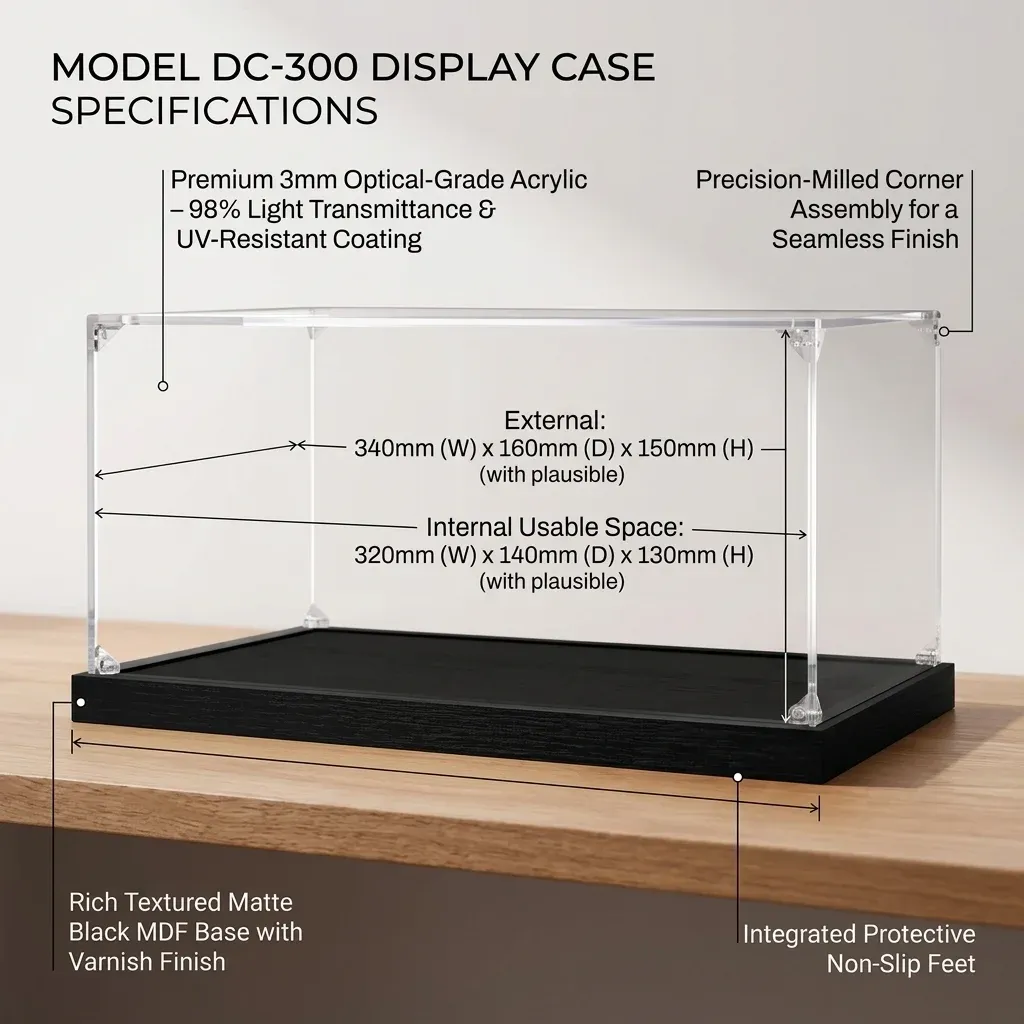
Short answer: a transparent collectable case is worth buying when the acrylic is genuinely clear and rigid, and the internal dimensions leave safe clearance around the item. Measure the collectable first, judge the optical quality, and buy for fit and clarity rather than the advertised external size.
If you have been let down by cheap, thin plastic covers that warp the view and haze within months, the priority is obvious: you want the clearest case that shows the model honestly, without distortion. This guide covers how to judge clarity and how much clearance to leave.
What should UK buyers compare?
Before you buy, weigh up four things: the optical clarity of the material, the rigidity and thickness of the panels, the internal clearance around your item, and how the cover closes onto the base. Get those right and the case disappears, leaving only the model.
How do you judge acrylic optical clarity?
Clarity is where cheap cases fall down. Look for cast acrylic rather than thin extruded or moulded plastic: cast acrylic is optically clearer and, as a category, transmits around 92% of visible light, with clean edges and no rippled reflections. Thin, flimsy plastic covers are the ones that distort straight lines and fog up — exactly the problem collectors describe when they say they want the best clear case without distortion. Rigid panels of around 3 mm also stay flat, so you do not get the funhouse effect of a bowed sheet.
Cast versus extruded acrylic
Cast acrylic is made in sheets and tends to be more rigid and optically consistent, which is why it holds its shape and clarity over years of display. Thin extruded or vacuum-formed covers are cheaper to produce but flex easily and are the usual culprits behind a wavy, distorted reflection. If a case feels light and bendy in the hand, that is a warning sign.
How to spot a distortion-prone case before you buy
Check the stated panel thickness, look for the word cast rather than just plastic, and read reviews for mentions of haze, yellowing or a warped reflection. For a main display piece you are upgrading to, it is worth paying a little more for panels that stay clear and flat.
How much clearance should a display case have?
Measure the collectable's length, width and height, and include anything that projects — wings, mirrors, aerials or a base plaque. As a general rule, allow roughly 30–50 mm of clearance on each side so nothing touches the acrylic and the piece has room to breathe.
Crucially, work from the case's internal dimensions, not the external size quoted in the headline. The AcrylicDis case gives internal dimensions of 65 x 30 x 20 cm, which suits 1:8 supercars and the 42206 RB20. For measuring a very large build in detail, see our large acrylic display case guide.
Dust, light and long-term display
Clarity is only worth having if it lasts. A well-sealed case keeps dust off the item so the surface stays clean, and acrylic that filters UV helps protect colours from fading. For the detail on sealing and cleaning without scratching, read our dustproof model display box guide.
Quick buying checklist
- Cast acrylic, not thin moulded plastic, for distortion-free clarity.
- Rigid panels (around 3 mm) that stay flat and do not bow.
- Internal dimensions that leave 30–50 mm clearance around the item.
- A cover that closes cleanly onto a stable base with no rubbing.
- UV filtering and a good seal for long-term display.
The AcrylicDis transparent collectable case
The AcrylicDis transparent collectable case is built around clarity: 3 mm REACH-compliant cast acrylic that filters up to 98% of UV, internal dimensions of 65 x 30 x 20 cm, and a high-density matte black base that makes the model stand out. It assembles without glue, weighs 3.8 kg, comes with a 12-month warranty, free UK delivery and 30-day returns, and is rated 4.7 out of 5 from 183 reviews.
Upgrade to a case that shows your model honestly
View the AcrylicDis display case — £79.99Frequently asked questions
How do you judge the clarity of a transparent collectable case?
Look for cast acrylic rather than thin moulded plastic. Cast acrylic is optically clearer, transmits around 92% of visible light as a category, and has clean edges, while thin flimsy plastic distorts straight lines and hazes over time.
How much clearance should a collectable case have around the model?
Measure the item including anything that projects, then allow roughly 30 to 50 mm of clearance on each side so nothing touches the acrylic. Always work from the case's internal dimensions.
Is cast acrylic clearer than thin moulded plastic?
Yes. Cast acrylic is rigid and optically clear, so it shows the model without distortion, whereas thin extruded or moulded plastic can warp the view and fog up within months.
Are internal or external dimensions more important?
Internal dimensions matter most, because they decide whether the item actually fits with clearance. External figures can be a few centimetres larger than the usable space inside.
Ready to elevate your display with AcrylicDis?
Explore Collection — £79.99