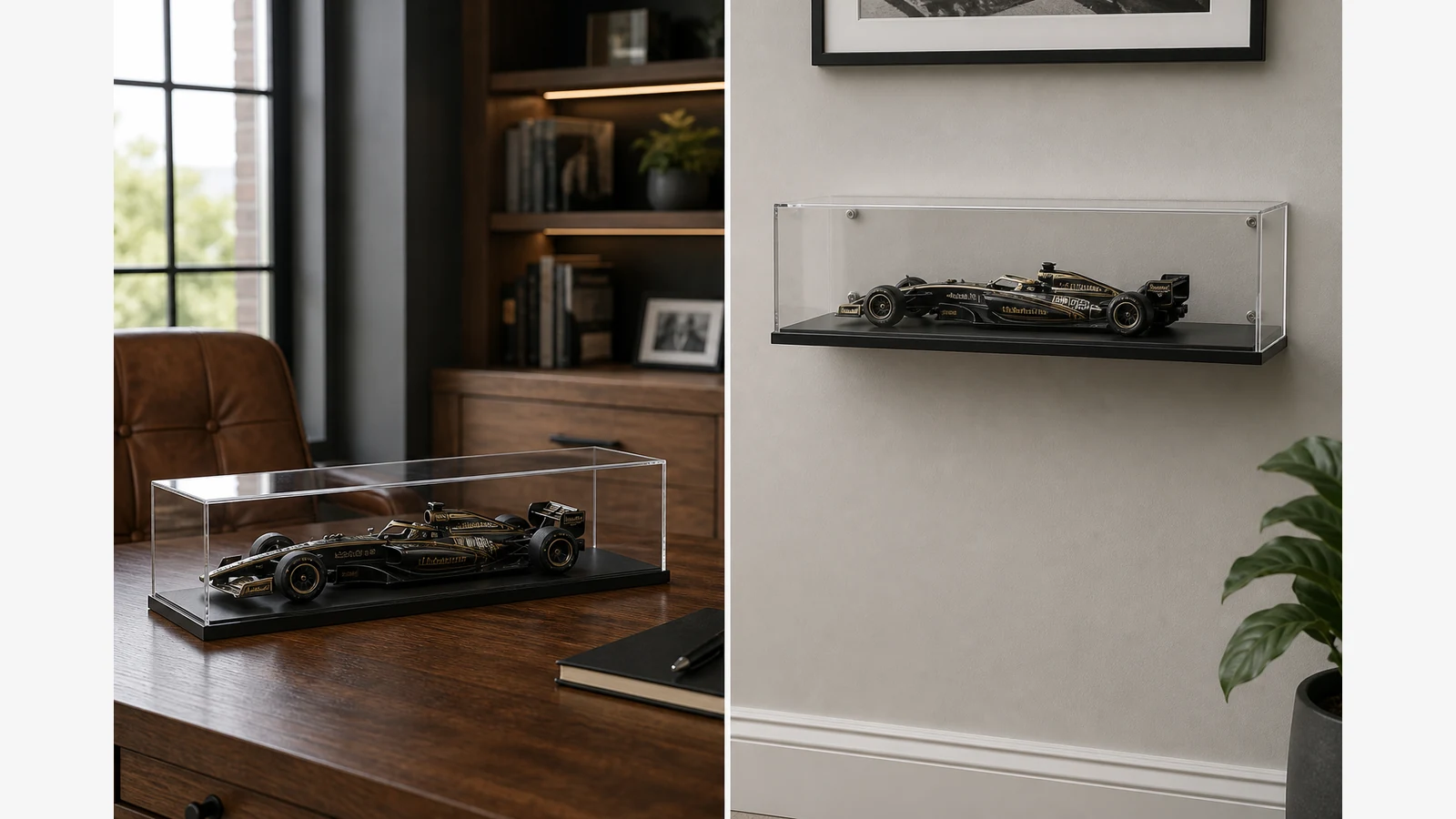
Wall Mounted Vs Freestanding Lego F1 Display Case Uk
Freestanding suits desks and deep shelves when you want easy access; wall-mounting frees floor or shelf space but needs sound fixing and usually favours lighter acrylic over glass. Pick by knock risk, renter constraints and whether you will move the case with the model inside—not by aesthetics alone.
Why acrylic often wins for wall displays
UK collector guidance commonly prefers acrylic for wall mounting because of lower weight and safer handling versus glass cabinets. BrickZoneHub’s acrylic versus glass comparison states acrylic is usually the practical choice for wall displays on those grounds. That is a materials preference, not structural engineering advice for every wall type.
Room constraints to check
- Can you fix into a suitable substrate, or are you in a rental that forbids it?
- Is the wall in a hallway with bump risk, or a quiet study wall?
- Will direct sunlight or heat hit that wall?
- Will you move the case with the model still inside?
Market cue: some 42206 cases are sold in wall-mounted limited editions as well as standard desk formats—see the Wicked Brick 42206 freestanding and wall-mounted variants.
Who should avoid wall mount
Renters who cannot fix into suitable substrate, and anyone planning frequent model swaps. Freestanding on a deep desk keeps access simple and avoids wall damage.
Safety and placement notes
Support cases from the base when moving, and keep displays away from direct sunlight and heat—practical advice also echoed in BrickNest’s display case assembly guidance. Do not treat UV filtering claims on any case as permission for a sunny south-facing wall.
Related decisions
If you are still choosing presentation colour on a freestanding desk, compare a black base versus a clear base. Size the shelf before mounting or placing anything with the 42206 dimensions checklist, and for large footprint planning see our large acrylic display case buyer’s guide.