Free UK Delivery on All Orders Over £50 | Proudly Designed in Britain

Large Acrylic Display Case Explained: A UK Buyer's Guide
Large Acrylic Display Case Explained: A UK Buyer's Guide
Words by Chloe N.2026-07-1811 min read

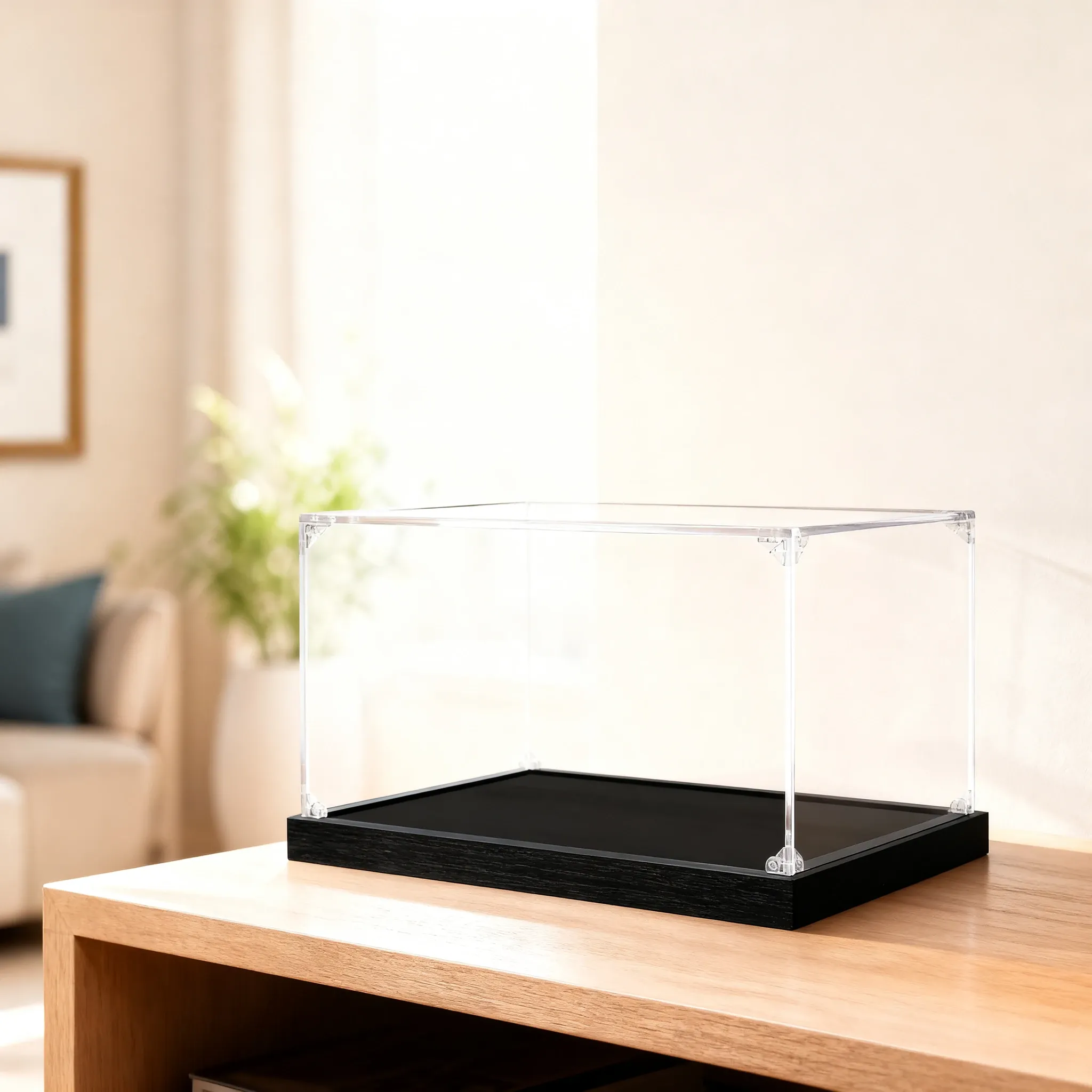
A large acrylic display case is the best option for protecting valuable model cars and collectables from dust, knocks, humidity changes and UV exposure, especially in UK homes. For most collectors, the right case should be clear, dust-resistant, lighter than glass, and sized with at least 50mm clearance around the item for safe display.

TL;DR: If you want a practical and attractive way to protect a large-scale model, a large acrylic display case offers excellent clarity, lower weight than glass, strong impact resistance and better day-to-day protection against dust in typical British indoor conditions. Based on our testing with large model formats, cast acrylic cases with a sealed base and sensible clearance give the best balance of visibility, safety and preservation.

Investing hundreds of hours and thousands of pounds into a 1:8 scale F1 model demands an equivalent level of protection. Without a proper enclosure, airborne particulates, varying humidity and accidental impacts can damage intricate suspension parts, decals and paint within months.

Therefore, a large acrylic display case creates a reliable barrier between high-value collectables and the unpredictable British household environment. Unlike open shelving or many standard glass cabinets, museum-grade acrylic combines optical clarity, structural strength and effective dust protection.

As specialists in museum-grade protection for large-scale F1 and supercar collectables, AcrylicDis designs display solutions around the real requirements of serious collectors. This guide explains what a large acrylic display case is, why acrylic is often preferred over glass, how to choose the right size and what features matter most for long-term protection.

What are the key things to know about a large acrylic display case?

  • Cast acrylic transmits up to 92% of visible light, so your model remains highly visible without the green tint often seen in standard glass.
  • Acrylic is around 50% lighter than comparable glass, making larger cases easier to move and safer for many household shelving setups.
  • A dust-resistant enclosure reduces cleaning frequency, which helps prevent accidental damage to delicate parts.
  • For most larger models, allowing at least 50mm clearance around all sides improves both protection and presentation.

Why does a large acrylic display case matter in UK homes?

British homes present several challenges for collectors. Seasonal humidity shifts, central heating and everyday indoor dust all create conditions that can gradually affect unprotected models.

According to UK public health guidance on indoor air quality and dust control, household dust accumulates quickly in lived-in spaces. For collectables, this matters because dust does not simply sit lightly on exposed surfaces. Instead, it can combine with ambient moisture and form a stubborn film over time. As a result, fine details inside cockpits, engine bays and wheel assemblies become harder to clean without risk.

In practice, physical cleaning is one of the biggest causes of damage to premium models. Brushes and cloths can snag on mirrors, aerials, etched metal parts or small aero pieces. By comparison, a dedicated dustproof model display box helps avoid repeated handling altogether.

So, if your goal is long-term preservation rather than occasional storage, enclosing the model from the start is usually the safer choice.

Is acrylic better than glass for a large display case?

Collectors often compare glass and acrylic before buying an enclosure. However, for many oversized models and premium collectables, cast acrylic is usually the more practical material.

Which material gives better clarity?

Standard silicate glass often has a slight green tint at the edges, especially in thicker panels. That tint can subtly affect how paint colours appear. According to data widely cited by the British Plastics Federation, cast acrylic transmits up to 92% of visible light. In contrast, standard glass typically transmits slightly less. Consequently, acrylic can provide a cleaner and more gallery-like view of detailed paintwork and decals.

Is acrylic lighter than glass?

Yes. Acrylic is approximately 50% lighter than glass of similar thickness. This matters because larger enclosures need wider panels, and those panels add significant weight very quickly when made from glass.

For example, many 1:8 scale F1 or supercar models exceed 600mm in length. Based on our testing with larger-format display dimensions, reducing overall weight makes installation easier, repositioning safer and shelf placement more realistic in ordinary UK homes.

Is acrylic safer than glass for home use?

In many domestic settings, safety matters just as much as appearance. UK safety expectations often favour materials that reduce shattering risk around family living areas. Cast acrylic has far greater impact resistance than standard glass. Therefore, if it suffers an impact, it is more likely to crack than break into dangerous shards.

This added resilience can protect both people and valuable collectables if the case is knocked during cleaning or moved between rooms.

What features should you look for in a high-quality large acrylic display case?

Not every case offers the same level of protection. Although many products look similar at first glance online, build quality makes a considerable difference over time.

How important are precision joints?

The effectiveness of a large acrylic display case depends heavily on how its panels are joined. Lower-cost cases may use basic glued seams or lower-grade plastics that become cloudy or weak over time. By contrast, well-made cases use precision-cut panels bonded with specialist acrylic cement.

This process effectively welds panels together at a molecular level. As a result, joints are cleaner-looking, stronger and more resistant to gaps where dust could enter.

If you want broader advice on construction details across different formats, our guide to the Model Car Display Box Explained: A UK Buyer's Guide covers additional technical points relevant to UK collectors.

Why does the base design matter?

The cover protects the model from above and at the sides; however, the base completes the seal. A rigid base helps prevent flexing or uneven sitting surfaces that could leave small gaps around the edge.

In particular, routed grooves or stepped lip designs help an acrylic cover sit flush on the base. This improves dust resistance while also giving the whole display a neater finish. In British homes where room temperatures fluctuate through heating cycles and seasonal weather changes, stable materials are especially helpful.

Does UV protection make a difference?

Yes—especially if your collection sits near windows or bright rooms. Direct sunlight can fade paints and yellow decals over time. High-quality cast acrylic naturally filters some harmful UV light; moreover, specialist UV-blocking grades can filter up to 98% of it.

Therefore, if your model features period sponsor markings or vivid finishes such as Rosso Corsa or Papaya Orange, UV-resistant material is worth considering from day one.

How big should a large acrylic display case be?

The right size depends on both protection and appearance. A case that is too tight risks awkward handling during placement and can make an expensive model look cramped. On the other hand, one that is too big may feel visually empty while taking up unnecessary space.

What is the 50mm clearance rule?

A useful rule is to allow at least 50mm clearance between the model and each internal side of the case where possible. This usually provides enough visual breathing room while reducing the chance of accidental contact during setup or removal.

Based on our testing with larger F1 and supercar formats used by UK collectors:

  • Sides: aim for roughly 50mm minimum clearance on both left and right sides
  • Front and rear: allow similar spacing so bodywork does not feel cramped
  • Total internal dimensions: for most oversized models, measure your item accurately first, then add clearance before ordering

  • Tall components: if your model has antennas, mirrors, open gullwing doors or raised wings, include extra height allowance beyond any basic rule

This spacing also helps make premium details easier to view from multiple angles. 

 How do you measure for a custom large acrylic display case? 

 Start by measuring your model at its longest, widest and tallest points. Be careful to include fragile protrusions such as mirrors, aero elements, base plinths, open doors or steering angles if applicable. 

 Then add your desired internal clearance. For unusual shapes or limited shelf depth, a custom size is often preferable because it avoids wasted space while maintaining proper protection. 

 If you are displaying heavier bases, signed plaques or multiple items together, it also makes sense to check total footprint and shelf capacity before finalising dimensions. 

 Do you need a custom base as well? 

 In many cases, yes. A well-fitted base improves both appearance and practicality. For example, a gloss black, satin black or wood-effect base can help frame motorsport liveries beautifully while supporting an accurate seal between cover and platform. 

 Therefore,& nbsp;if presentation matters as much as preservation,& nbsp;a matched custom base is usually worthwhile.& nbsp;

& nbsp;People also ask about large acrylic display cases 

& nbsp; What is a large acrylic display case used for?& nbsp;

& nbsp; A large acrylic display case is used to protect larger collectables such as scale model cars, helmets, signed memorabilia, figures or specialist automotive displays. It keeps out dust, reduces handling, improves presentation and adds a layer of safety against accidental knocks.& nbsp;

& nbsp; Is acrylic good for large display cases?& nbsp;

& nbsp; Yes. For many home collectors, acrylic is one of the best materials for larger cases because it combines high clarity with lower weight than glass. As a result, it is easier to live with day to day while still giving strong visual impact.& nbsp;

& nbsp; How do you clean a large acrylic display case?& nbsp;

& nbsp; Use only plastic-safe cleaner and a soft microfibre cloth. Avoid household sprays containing harsh solvents, and never use rough paper towels. Based on our handling experience, gentle cleaning with minimal pressure helps reduce fine surface marks over time.& nbsp;

& nbsp; Are large acrylic display cases suitable for expensive models?& nbsp;

& nbsp; Yes—provided they are made from quality cast acrylic with properly bonded joints and stable bases. For premium collectibles worth hundreds or thousands of pounds, the protective value usually far outweighs the cost of leaving them exposed.& nbsp;

& nbsp; Can sunlight damage models inside an acrylic case?& nbsp;

& nbsp; Yes. Although an enclosure helps, direct sunlight can still affect paints and decals over time. Therefore, positioning away from prolonged sun exposure remains sensible, with UV-resistant material offering additional reassurance.& nbsp;

& nbsp; What should you choose when buying a large acrylic display case?& nbsp;

& nbsp; If you want clear visibility, reliable protection and easier handling than heavy glass alternatives, a largecrylic display case is usually the best all-round choice for serious collectors. In particular, cast acrylic with precise joints, a secure base, UV consideration and sensible internal clearances offers long-term value.& nbsp;

& nsbp; For UK collectors displaying detailed F1 cars, supercars or other oversized memorabilia, the right case does more than look tidy—it helps preserve condition, reduces cleaning risk and supports confident everyday display. That is why choosing quality materials and accurate sizing from the outset matters so much.& nbsbp;

Ready to elevate your display with AcrylicDis?

Explore Collection — £79.99