Acrylic or glass for a large model car display case: stiffness, scratches and care
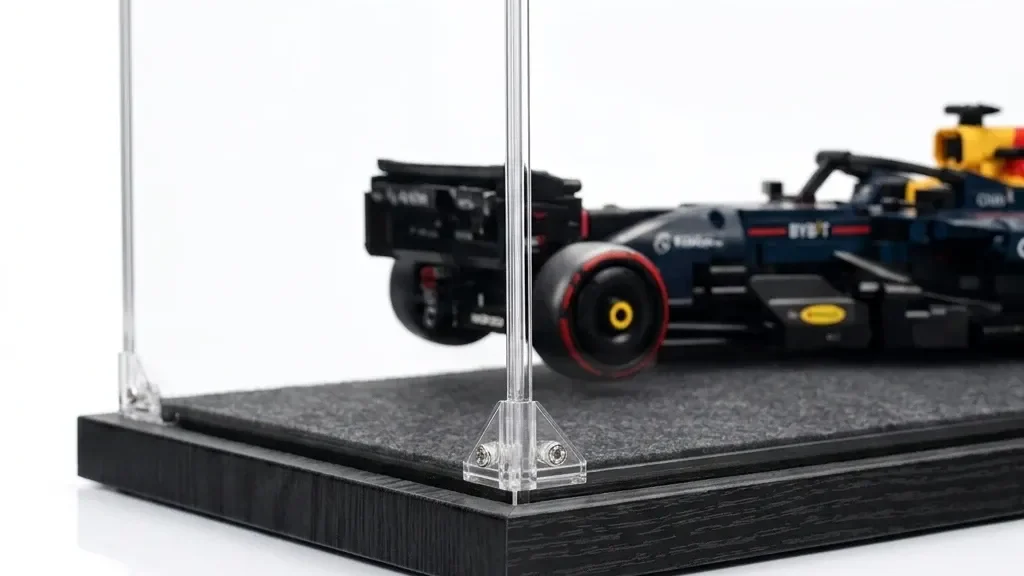
TL;DR: Choose acrylic if reducing cover weight and prioritising impact resistance over conventional plate glass matter most. Choose glass if stiffness and resistance to surface scratching matter more. Treat either choice as a material preference: ask about the actual case construction before deciding whether a particular 3 mm acrylic case suits your display.
The acrylic vs glass model display case decision involves several separate trade-offs. ACRYLITE’s material reference states that acrylic has lower tensile strength and stiffness than glass, while its surface is less hard and less chemically resistant. It also states that acrylic sheet weighs half as much as glass of the same size and thickness.
That makes acrylic worth considering if you expect to remove the cover regularly and want to prioritise lower panel weight. Glass deserves consideration if your priority is a stiffer material with a surface less prone to scratching. These are buying recommendations based on material properties, rather than results from a comparison of assembled display cases.
Impact resistance needs a precise comparison
ACRYLITE reports that acrylic has 10–20 times the impact strength of conventional plate glass, but similar impact strength to tempered glass. The type of glass therefore matters: do not read an advantage over conventional plate glass as an equivalent advantage over every glass cover.
What does “3 mm cast acrylic” tell you?
AcrylicDis describes its case panels as 3 mm cast acrylic. Use that as a product specification, then assess the assembled case separately. For this purchase, a useful decision rule is to ask two questions: does the material suit your priorities, and does the particular case have the construction and fit you want?
Do not use the thickness label alone as your acceptance criterion for panel alignment, joint quality or how the cover sits on its base. Ask for evidence of those details rather than treating a material description as a finished-case test.
Separate stiffness from impact resistance
For an acrylic vs glass model display case comparison, judge stiffness and impact resistance separately. ACRYLITE states that acrylic has lower tensile strength and stiffness than glass. Its impact comparison gives a different result: acrylic has greater impact strength than conventional plate glass, but similar impact strength to tempered glass.
Use those distinctions to set your priorities. If your main concern is panel stiffness, favour glass at the material-selection stage. If resistance to accidental impact is your priority, consider acrylic over conventional plate glass. When a seller simply says “glass”, ask which type before drawing an impact-resistance conclusion. Neither material comparison establishes how a particular assembled case will perform.
Compare panel weight on equal terms
ACRYLITE states that an acrylic sheet is half the weight of glass of the same size and thickness. That makes acrylic a sensible material to shortlist if you expect to remove a large cover regularly.
Keep the comparison at panel level. For the buying decision, request the actual assembled cover weight and check how the manufacturer intends it to be removed. Do not use the sheet-weight ratio as a prediction of the weight of two complete cases with different dimensions, bases or fittings.
Make scratch resistance part of the care decision
According to ACRYLITE, acrylic has a less hard and less chemically resistant surface than glass, making it more prone to scratching and abrasion; many glass cleaners cannot be used on acrylic sheet. Glass therefore deserves consideration if surface scratch resistance is a leading priority. This is a material trade-off, rather than a prediction of how long either finished case will remain unmarked.
For acrylic, plan the care routine before buying. AcrylicDis advises using a soft microfibre cloth and, if needed, a specialist anti-static acrylic cleaner, and advises against glass cleaner or paper towels. Ask the supplier of the case you choose to confirm suitable cleaning products, especially if a surface treatment or coating is advertised.
Treat 3 mm as a specification to investigate
AcrylicDis lists its panel specification as 3 mm cast acrylic. Treat that as the seller’s material description, rather than independent proof that the finished case meets your expectations for rigidity, fit or appearance.
As a proposed buying check, assess three things separately:
- Panels: request the material specification and clear photographs of the assembled cover. Ask what information the seller can provide about rigidity at that case size.
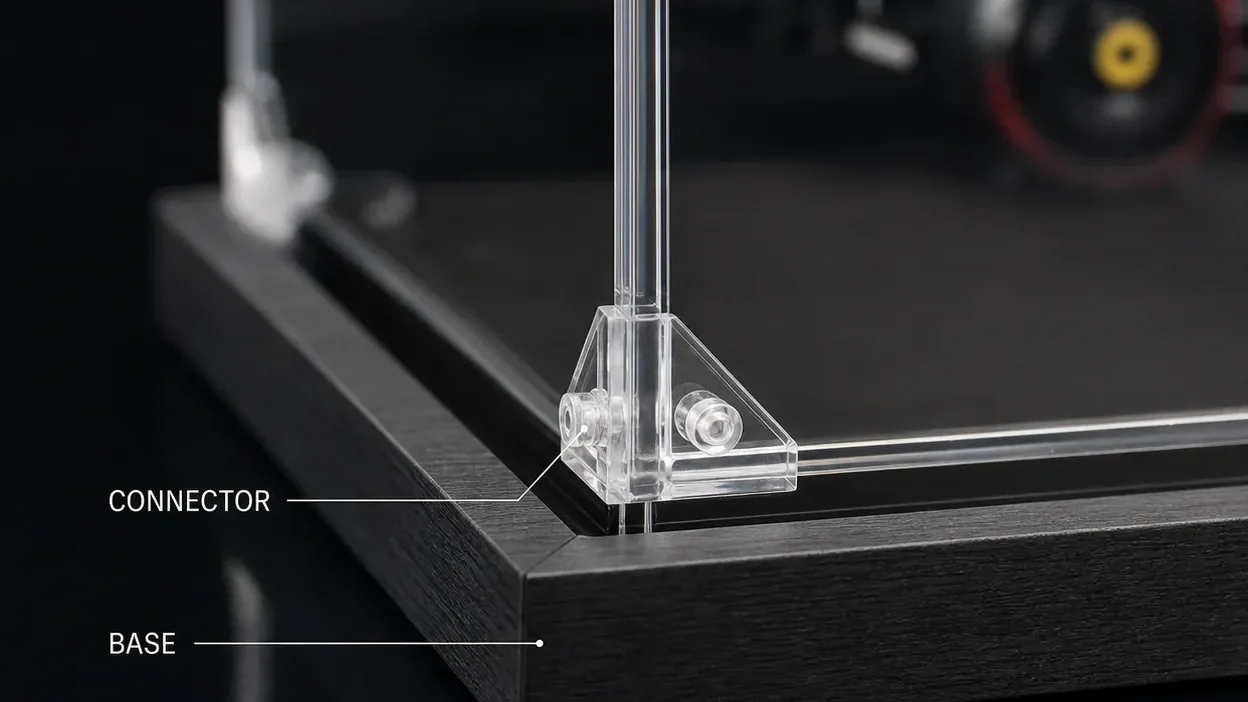
- Joints: examine the assembly instructions and ask how the panels engage and remain aligned. Avoid inferring joint quality from panel thickness alone.
- Base: request a close view of how the cover seats on the base, and check whether the instructions explain alignment and removal.
These checks are a way to assess an offer, not a performance test or a certification. If all you have is “3 mm cast acrylic”, keep the judgement narrow: you have a stated material and thickness, while the quality of the assembled panels, joints and base still needs assessment.
Shortlist the material, then verify the case
For your next step, shortlist acrylic if lower panel weight and impact resistance relative to conventional plate glass are your priorities. Shortlist glass if you place more importance on material stiffness and surface scratch resistance. Before purchasing either, ask for the panel specification, photographs of the assembled case and its care instructions.
The basis for that recommendation is ACRYLITE’s comparison: acrylic sheet is half the weight of glass at equal size and thickness, but has lower stiffness and a surface more prone to scratching. Its reported impact advantage over conventional plate glass should not be extended to tempered glass, which the reference describes as having similar impact strength to acrylic.
If considering AcrylicDis, start with its display-case product page, which specifies 3 mm cast acrylic. Request any additional construction detail you need before treating it as the right finished case for your model.
Keep value as a separate decision. Compare actual shortlisted offers against your priorities; this material comparison is not a recommendation to pay a particular premium. If another option is described only as a “cheaper plastic box”, ask for its material and construction details before including it in the same comparison.
Sources for your decision
- ACRYLITE: Acrylic vs Glass — the manufacturer’s reference for the material properties discussed here. Use it to understand the trade-offs, rather than as a test of an assembled AcrylicDis case.
- AcrylicDis display-case product page — the seller’s stated product specification.
- AcrylicDis dustproof model display box guide — the seller’s published acrylic-care advice.
Choose the material whose compromises you are comfortable with, then make the final purchase depend on satisfactory information about the particular case.
Ready to elevate your display with AcrylicDis?
Explore Collection — £79.99£79.99 including VAT is the price on the product page on 23 November 2026. Check that page again before you order.