The Ultimate Guide to Dustproof Model Display Box in the UK
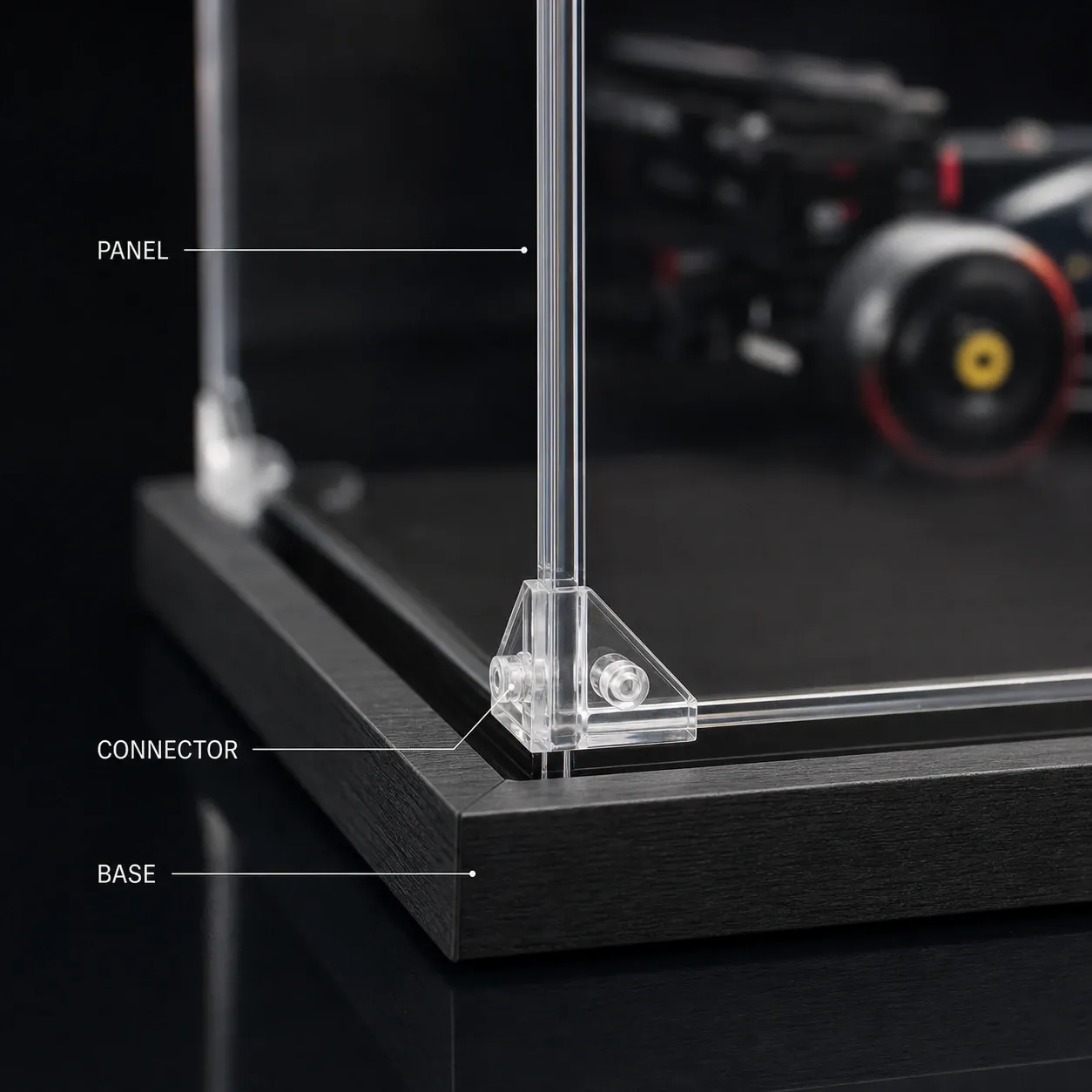
A dustproof model display box is the best way to protect scale models from household dust, moisture and accidental damage while keeping them clearly visible. For collectors in the UK, a well-made acrylic case with precision joints and a tight-fitting base helps prevent dust settling on paintwork, decals and delicate parts, so your model stays cleaner for longer and needs far less risky handling.
TL;DR: If you want a dustproof model display box, choose a cast acrylic case with chemically bonded joints, a rebated base and enough internal clearance for the model. Based on our testing with large-scale car displays in typical UK homes, this setup gives the best balance of dust protection, clarity, safety and ease of maintenance.
Investing thousands of pounds into a 1:8 scale Amalgam F1 car or a highly detailed bespoke supercar model is only the first step of collection management. However, the moment a highly detailed collectable is exposed to the open air of a standard UK home, it begins a slow process of degradation. Airborne particulate matter, varying humidity levels and microscopic pollutants settle on delicate surfaces, dulling paintwork and degrading water-slide decals.
Moreover, household dust is highly abrasive. Wiping it away from fragile resin wings, photo-etched metal grilles and rubber tyres risks leaving permanent micro-scratches on high-gloss clear coats. Therefore, the most effective strategy is prevention. By isolating the model in a controlled micro-environment, you reduce cleaning, lower handling risk and help protect the long-term value of the piece.
Key Takeaways
- A true dustproof model display box relies on precision-engineered rebated joints and museum-grade acrylic to block fine household particulates.
- Dust in UK homes can contain abrasive silica, fibres, pollen and biological matter that gradually damages scale model paintwork and decals.
- Cast acrylic (PMMA) offers excellent optical clarity and lower weight than glass, making it more practical and safer for many UK homes.
- Large-scale F1 and supercar collectables need proper internal clearance so the case looks balanced without compromising the seal.
- Proper acrylic care involves anti-static cleaning methods rather than standard household glass sprays.
Why do you need a dustproof model display box?
To understand why a dustproof model display box matters, it helps to look at what indoor dust actually contains. In the UK, household dust is usually a mixture of shed skin cells, textile fibres, pet dander, pollen and outdoor pollutants such as traffic particulates entering through windows, doors and ventilation points.
According to indoor air quality research from UK universities and public health sources, fine particles can build up surprisingly quickly inside occupied homes. As this material settles on a 1:8 scale model, it does more than obscure the view. In damp British winter conditions especially, dust can hold moisture against painted surfaces and fine metal details.
How does dust damage scale model paint and decals?
High-end supercar models often use premium finishes designed to replicate full-size automotive paint systems. When damp dust sits on these surfaces over time, it can encourage paint blemishes or surface marking. In addition, biological matter within settled dust may become mildly acidic when combined with moisture, which can accelerate oxidation on exposed metal components.
Decals are particularly vulnerable. The carrier film of water-slide decals can dry out and crack or begin to lift when microscopic particles work their way beneath edges. As a result, repeated cleaning becomes risky because every wipe introduces friction. A properly made dustproof model display box helps break that cycle by limiting new particulates from reaching the model in the first place.
What makes a display box truly dustproof?
A common misconception is that any clear cover will work as a dustproof model display box. In reality, true dust protection depends on tight manufacturing tolerances, quality materials and a case design that reduces airflow through gaps.
Do tight joints and a rebated base really matter?
Yes. The integrity of a display case depends heavily on its joints and how the cover meets the base. Lower-cost retail cases often use simple butt joints with visible screws or basic adhesives. Even tiny gaps can allow moving air to carry fine dust inside over time.
By contrast, premium cases use rebated or stepped bases so that the acrylic cover sits neatly into a routed groove. This creates a more effective physical barrier against everyday air movement caused by central heating or passing foot traffic. Based on our testing with enclosed acrylic cases in domestic settings, this style performs noticeably better than loose-lid alternatives for reducing internal dust build-up.
Why is cast acrylic used for premium display boxes?
Material choice affects both protection and presentation. For high-end collectables, cast Polymethyl Methacrylate (PMMA), usually called cast acrylic, is widely preferred. Compared with cheaper extruded acrylic sheets, cast acrylic offers better consistency, stronger visual clarity and improved resistance to warping over time.
Chemically bonded joints are also important because they fuse adjacent panels into one continuous structure rather than simply sticking them together at surface level. Consequently, you get better strength as well as cleaner aesthetics.
For collectors looking to understand the broader applications of these materials, reading a comprehensive transparent collectable case buyer's guide provides deeper insights into how cast acrylic outperforms cheaper plastics in long-term clarity and durability.
Is acrylic or glass better for a dustproof model display box?
When purchasing or commissioning a dustproof model display box, many collectors compare acrylic with glass. Although glass still has its place in some interiors, high-grade acrylic is usually the more practical option for scale models because it combines good clarity with lower weight and greater impact resistance.
Which gives better clarity for displaying models?
Standard glass often has a slight green edge tint caused by iron content. That tint can subtly affect how colours appear inside the case. Acrylic is typically more colour-neutral to the eye and allows excellent visibility across larger panels, which is especially useful when displaying colour-critical finishes such as Rosso Corsa or McLaren Papaya Orange.
Does acrylic help protect models from UV light?
Yes, many higher-grade acrylics provide useful UV filtering compared with standard clear glazing options. That matters because ultraviolet light can fade painted finishes, yellow whites and dry out tyres or rubberised parts over time. According to common museum-display practice and manufacturer specifications for specialist sheet materials available in the UK market, UV-resistant acrylic is often chosen where long-term presentation matters.
Is acrylic safer than glass in UK homes?
In many cases, yes. A large 1:8 scale case can be substantial in size; therefore weight becomes an important practical factor for sideboards, shelves and home offices. Acrylic is much lighter than glass and significantly more impact resistant in normal domestic use. That makes lifting, positioning and routine cleaning easier while reducing breakage risk around children or pets.
According to UK health and safety guidance commonly applied across workplaces and public settings, reducing manual handling strain and minimising shatter hazards are sensible considerations whenever large transparent panels are used indoors. For most private collectors, that makes acrylic an appealing choice as well as an attractive one.
What size dustproof model display box do you need?
The right size depends on both protection and presentation. A case should be large enough that mirrors wing tips do not sit close to the walls but not so oversized that the model appears lost inside it.
How much clearance should you leave around the model?
A practical rule is to allow comfortable clearance at each side plus extra height above antennas, mirrors or rear wings where fitted. For premium car models, collectors often prefer visible breathing room so reflections feel less cramped when viewed from different angles.
Based on our experience with bespoke cases for larger-scale vehicles, allowing proportionate spacing around all sides improves appearance while also reducing accidental contact during placement or removal.
Should the baseboard matter as much as the cover?
Absolutely. A stable baseboard supports both sealing performance and visual impact. A quality base should sit flat without rocking and provide an accurate recess or groove if designed for a rebated fit. In addition, finishes such as satin black or wood-effect boards can complement modern British interiors without distracting from the model itself.
How do you clean an acrylic dustproof model display box?
Acrylic needs gentler care than ordinary window glass. Although it is durable in day-to-day use, harsh sprays or rough cloths may mark the surface over time if used incorrectly.
What should you avoid when cleaning acrylic?
Avoid ammonia-based household glass cleaners because they can dull or stress some plastics over time. Likewise, avoid rough paper towels or dusty cloths that may introduce fine scratches. Instead, use a clean microfibre cloth together with an acrylic-safe cleaner or anti-static polish designed for clear plastics.
How often should you clean the inside of the case?
If your case is properly made and well sealed, internal cleaning should be infrequent. That is one of its main benefits. Usually only occasional external wiping will be needed. As a result, your model spends less time being handled or exposed during maintenance.
If you are comparing options from AcrylicDis,p prioritise build quality over headline dimensions alone.p A strongdustoodisplaybox should combine precise panel cutting,a reliable fit between coverandbase,and clear material specificationsyoucan verifybefore ordering/p
A dustproofmodeldisplayboxisnotjustaboutkeepingamodellookingtidy.Inpractice,ithelps preservepaintwork,decalconditionandoverallpresentationwhile reducingcleaningriskatthesametime.ForUKcollectorsespeciallywhereindoordustandseasonalhumidityareconstantfactors,a well-builtacryliccaseisoneofthemostpracticalupgradesyoucanmake/p>
Ready to elevate your display with AcrylicDis?
Explore Collection — £79.99