Model Car Display Case Explained: A UK Buyer's Guide
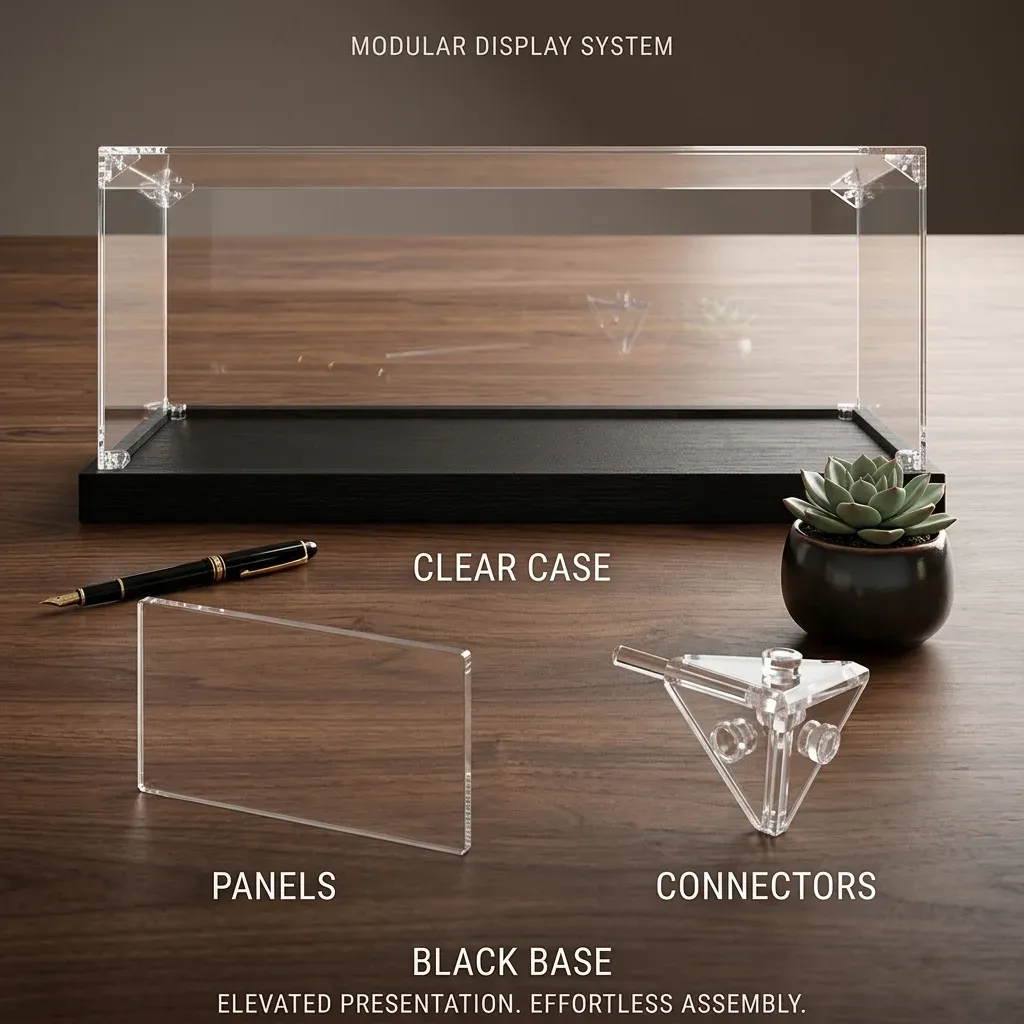
Short answer: a model car display case is worth it when a build is good enough to become part of a room rather than something stored in a box. Choose the right internal size, decide where it will live, and give it a stable, glare-free spot — a shelf deep enough to take the case without the cover overhanging.
When you move into a new home or reorganise a study, a large model such as the 42206 Oracle Red Bull Racing RB20 can go from a temporary shelf-sitter to the focal point of the room. A model car display case is what makes that possible: it keeps the model clean and protected while putting it on show.
What is a model car display case, and is it worth it?
- It is a clear, rigid cover on a solid base that protects a model from dust and knocks while keeping it fully visible.
- It is worth it once a build is a keeper — display protects the paint and decals you spent hours on, and makes the model a feature rather than clutter.
- For the material choice, see the acrylic-versus-glass comparison in our large acrylic display case guide.
Where should you display a model car in your home?
This is the question that decides whether a case looks like a centrepiece or an afterthought. A large F1 model works well as the focal point of a home office or study, where a matte black base gives it a gallery-style backdrop and keeps the eye on the model rather than the shelf.
How deep should the shelf be?
Measure the case, not just the model. A case that is 30 cm deep needs a shelf or sideboard of at least 30–33 cm so the cover sits fully supported with nothing overhanging the edge. A common mistake is buying a beautiful case and then finding it hangs off a standard 25 cm bookshelf.
Light, height and stacking
Position the case away from direct sunlight and radiators, and at a height where you can see the model at eye level. Large cases like these are designed to sit individually rather than be stacked, so plan a dedicated surface for each one rather than piling them up.
How do you make a model car the focal point of a room?
The display does the work here. Give the case its own surface rather than crowding it among books and photo frames, and let the matte black base provide the contrast so the eye goes straight to the car. A single, well-placed model at eye level reads as a deliberate feature; three or four scattered around a shelf read as clutter.
If you can, add gentle, indirect lighting to one side to bring out the livery and bodywork — but keep it off direct, prolonged sunlight to protect the finish. Because these large cases are not designed to be stacked, decide in advance whether one model earns pride of place or whether a run of matching cases along a sideboard suits the room better.
What size model car display case do you need?
Buy on internal dimensions and measure the model with its wings and mirrors included. A case with internal dimensions of 65 x 30 x 20 cm suits 1:8 supercars and the 42206 RB20. For the full method of measuring a large build and allowing clearance, our large acrylic display case guide goes deeper, and for dust sealing see our dustproof model display box guide.
The AcrylicDis model car display case
The AcrylicDis model car display case is designed as a room feature: internal dimensions of 65 x 30 x 20 cm, a high-density matte black base for a gallery look, 3 mm REACH-compliant cast acrylic filtering up to 98% of UV, and a no-glue slot-and-bracket assembly. It weighs 3.8 kg, includes a 12-month warranty, free UK delivery and 30-day returns, and is rated 4.7 out of 5 from 183 reviews.
Make your model the focal point of the room
View the AcrylicDis display case — £79.99Frequently asked questions
How deep does a shelf need to be for a model car display case?
Measure the case rather than the model. A case that is 30 cm deep needs a shelf or sideboard of at least 30 to 33 cm so the cover is fully supported and nothing overhangs the edge.
Where is the best place to display a model car in the home?
A home office, study or living-room sideboard at eye level works well, ideally with a matte black base for contrast. Keep the case out of direct sunlight and away from radiators to protect the finish.
What size case fits a large 1:8 scale model car?
Choose by internal size and measure the model including wings and mirrors. Internal dimensions of 65 x 30 x 20 cm suit 1:8 supercars and the 42206 Oracle Red Bull Racing RB20.
Can you stack model car display cases?
Large display cases like these are designed to sit individually, not to be stacked. Plan a dedicated shelf or surface for each case so the models stay stable and fully visible.
Ready to elevate your display with AcrylicDis?
Explore Collection — £79.99